Commercial Interior Systems
Compact laminate (HPL) vs MFC toilet cubicles: which to specify?
Solid compact laminate and melamine-faced chipboard look similar on a drawing. They perform very differently in a busy washroom.
Updated: 27 September 2026
What the materials are
- Compact laminate (HPL, SGL, CGL) — layers of kraft paper impregnated with phenolic resin, pressed at high pressure into a solid board (typically 12–13 mm) with decorative faces. No wood core.
- MFC (melamine-faced chipboard) — a particleboard core with melamine paper faces and edge banding, usually used in thicker boards for cubicles.
Performance in washrooms
| Factor | Compact laminate | MFC |
|---|---|---|
| Water and humidity | Unaffected by wetting; suitable for wash-down | Core swells if edges or faces are breached |
| Impact and vandalism | High impact and scratch resistance | Edges and corners chip; core exposed |
| Cleaning | Tolerates regular washroom chemicals | Moisture at joints is the weak point |
| Weight | Heavier per m² | Lighter |
| Cost | Higher | Lower |
Where each belongs
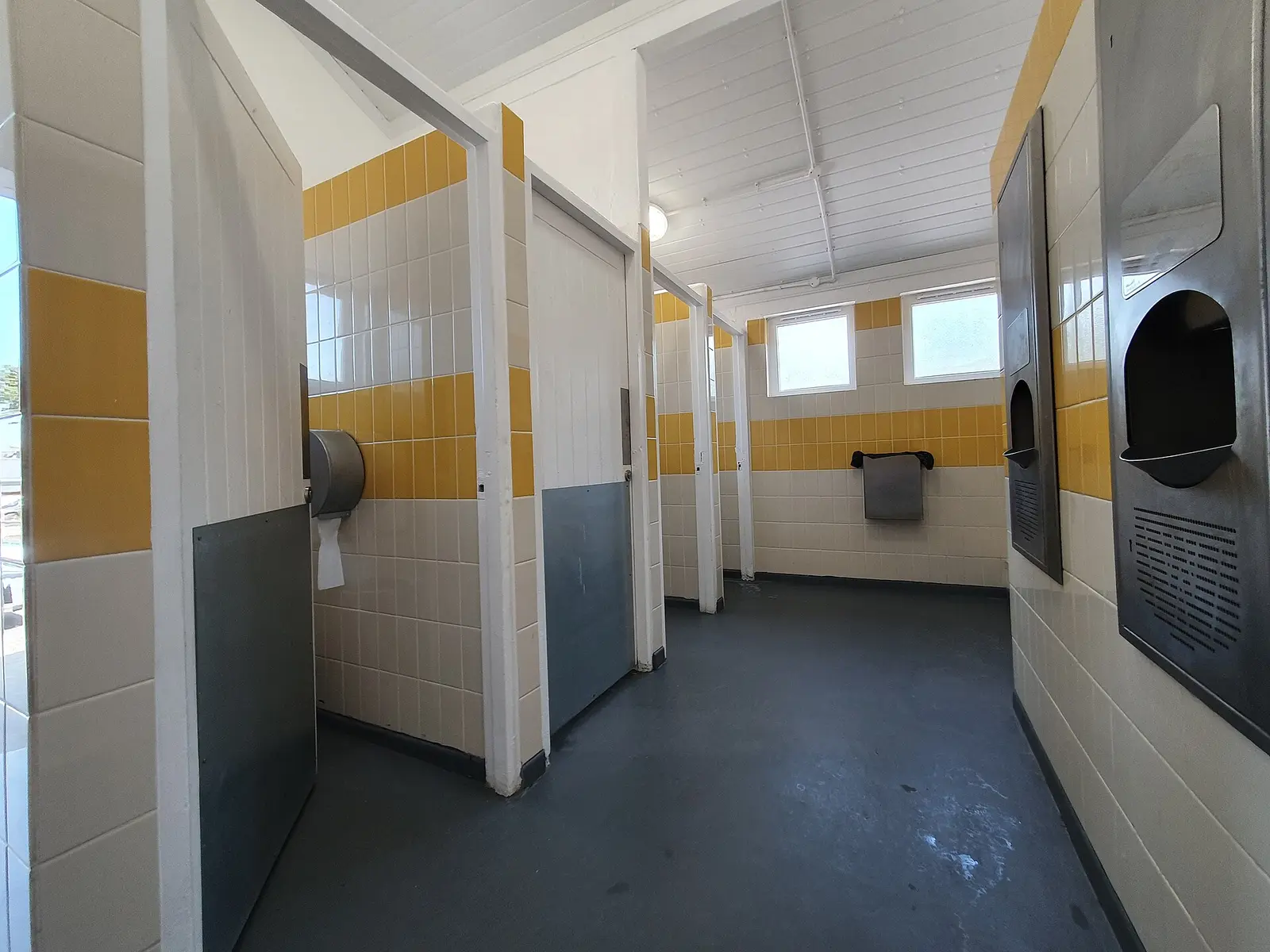
Specify compact laminate in schools, leisure centres, pools, stadiums, transport hubs and any washroom that is wet-cleaned or heavily used. MFC can suit low-traffic office washrooms with dry cleaning regimes and tight budgets.
Check the fire classification
Both materials exist in standard and fire-retardant grades. Ask for the test report of the exact board and match it to your building’s requirement.
Frequently asked questions
Can compact laminate cubicles be hosed down?
The boards tolerate water; check that hardware (stainless 316 in wet areas) and fixings are suitable too.
Why are compact laminate cubicles thinner than MFC?
The solid phenolic board is much denser and stiffer, so 12–13 mm is sufficient.
Related products
Request a Quotation
Tell us what you need. A specialist reviews every request and replies with a quotation or clarifying questions — usually within one business day.