Data Center Infrastructure Accessories
Blanking panels and rack airflow: a specification checklist
Why empty rack units cost cooling capacity, and what to specify when you buy blanking panels, brush panels and containment accessories in volume.
Updated: 27 September 2026
The problem: recirculation
Servers pull cool air in at the front and exhaust hot air at the back. Every empty U-space is an opening through which hot exhaust can flow back to the front of the rack. Equipment then ingests warmer air than the cooling system supplies, temperatures become uneven along the rack face, and operators compensate by overcooling. Blanking panels close these openings.
What to specify
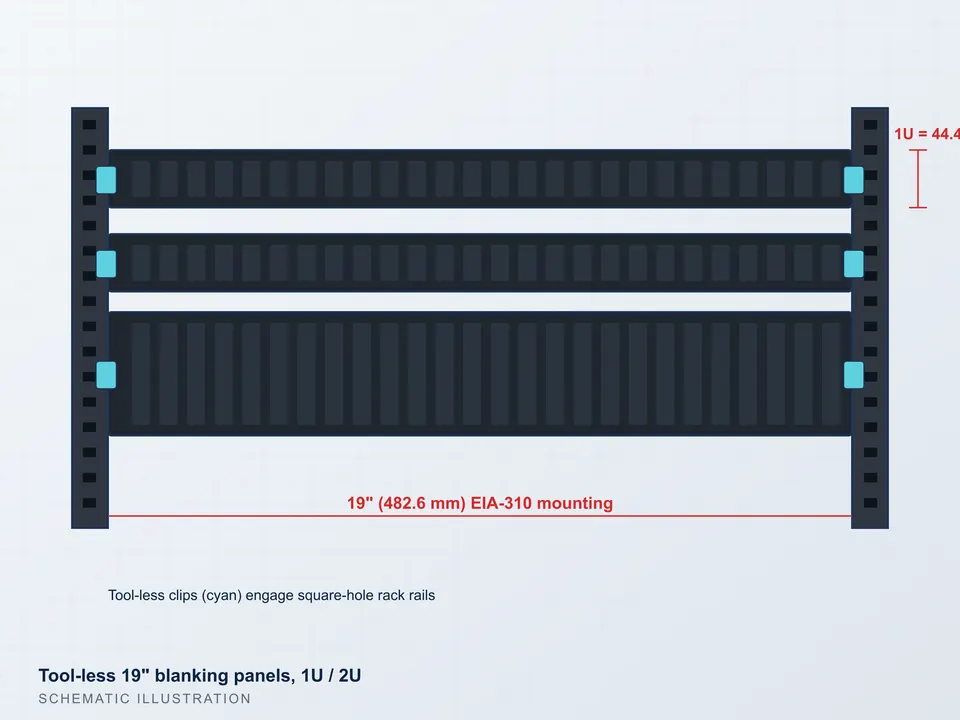
- Rack compatibility — 19-inch EIA-310; square-hole rails for tool-less panels. Note any rack brands in the estate.
- Height mix — 1U and 2U; count empty U per rack from your DCIM or an audit.
- Material and flame rating — plastics rated UL94 V-0 are the usual requirement in white space.
- Removal — tool-less panels speed up changes; check they cannot be pushed through the rack.
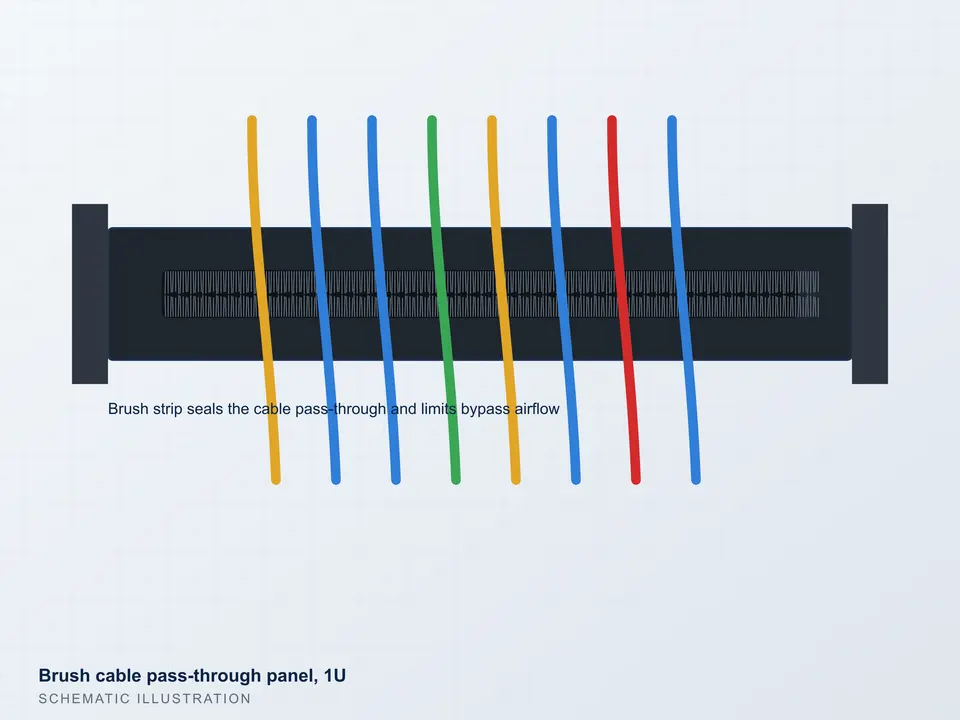
- Cable openings — brush panels in the rack and brush grommets in floor tiles.
- Gaps around the rack — side, top and bottom gaps need seals in contained aisles.
- Colour and labelling — black is standard; colour-coding and labels help audits.
Order planning
Blanking panels are a volume consumable: order by the hall, keep 5–10% spare, and standardise one or two part numbers across the estate so technicians always have the right panel.
Frequently asked questions
Do blanking panels matter without containment?
Yes. They reduce recirculation inside each rack even in open aisles; containment adds the next level of separation.
Plastic or steel?
Plastic tool-less panels are faster to install; steel panels are used where specific rack systems or fire strategies require them.
Related products
Request a Quotation
Tell us what you need. A specialist reviews every request and replies with a quotation or clarifying questions — usually within one business day.