
Data Center Infrastructure Accessories
Passive Air Sealing & Containment
Blanking panels, brush panels, split floor grommets, gap seals and aisle containment — the passive parts that keep cold and hot air where the cooling design expects it.


What “passive air sealing” covers
Cooling air takes the easiest path. Every empty rack unit, cable opening, gap between cabinets and hole in a raised-floor tile is a path that bypasses IT equipment. Passive sealing closes those paths without moving parts or power — which is why operators and integrators buy it as one package per rack row.
| Leak path | Product |
|---|---|
| Empty U-spaces in the rack | Tool-less blanking panels |
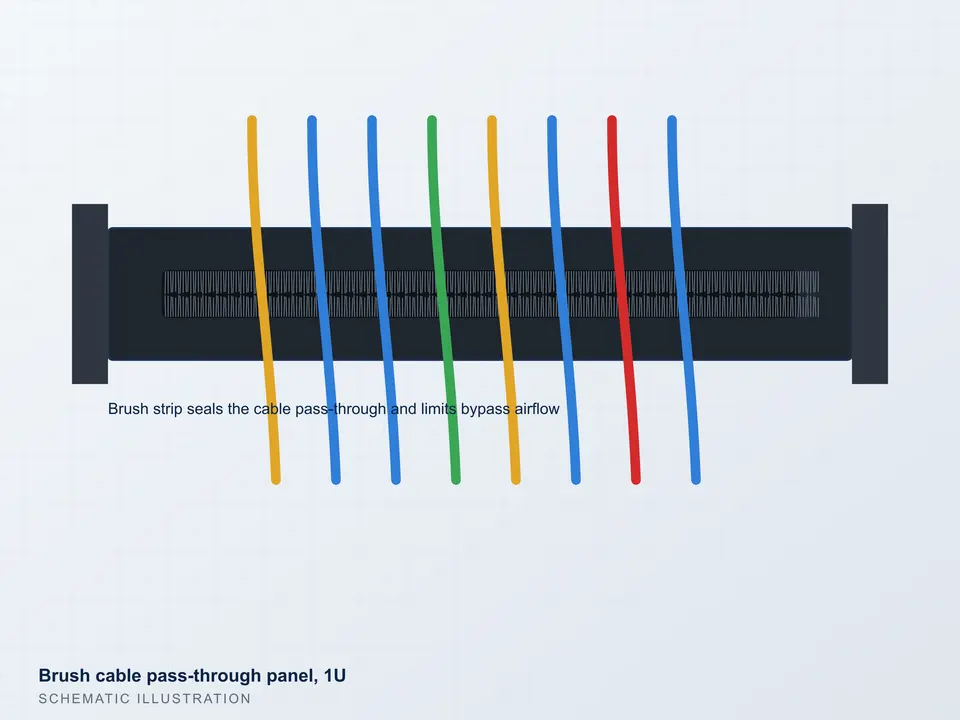
| Cables passing front-to-rear in the rack | Rack brush panels |
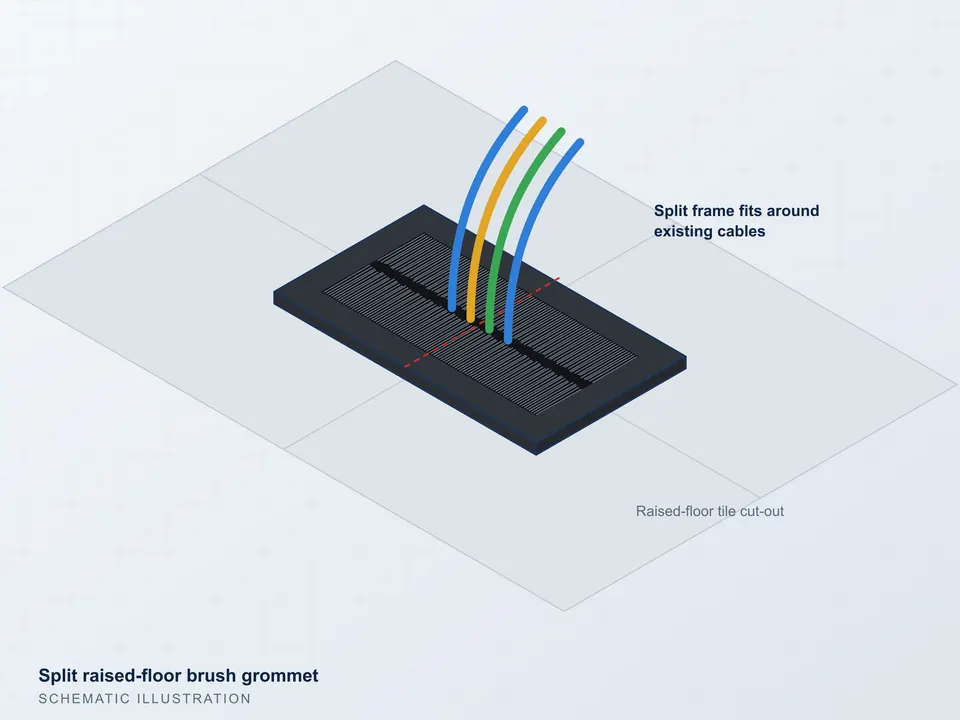
| Cable cut-outs in raised-floor tiles | Split raised-floor brush grommets |
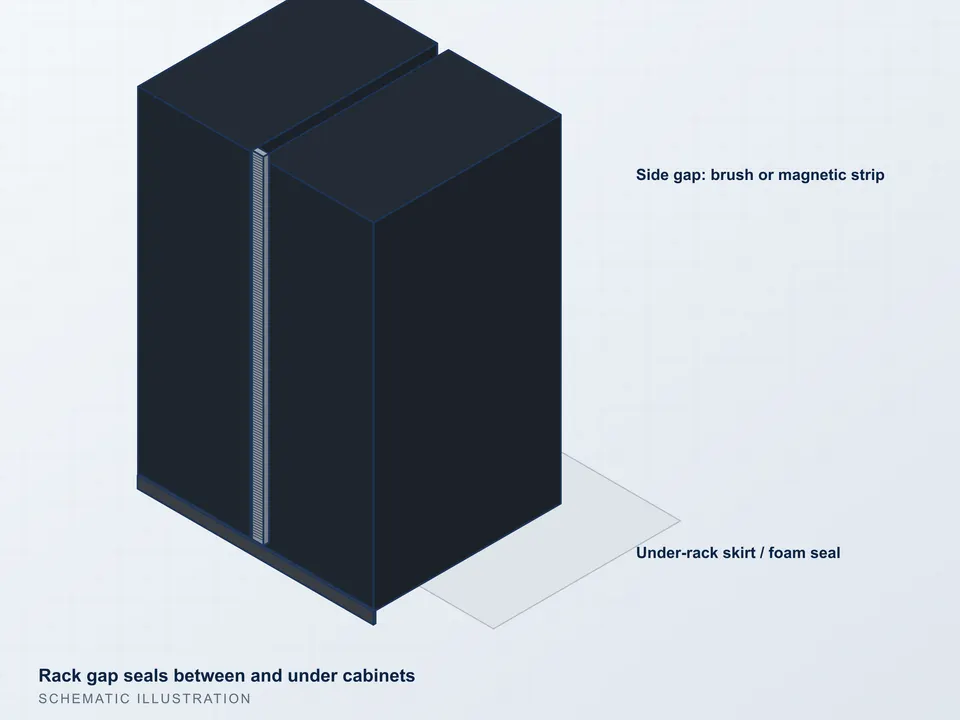
| Gaps between and under cabinets | Rack gap seals |
| Open aisle ends and tops | Aisle containment components |
How to specify a sealing package
- Audit empty U per rack, floor cut-outs (size and cable fill) and gap widths along each row.
- Match fit: rail type for panels, cut-out size and usable opening for grommets, surface (steel or not) for magnetic seals.
- Check materials: flame ratings of plastics are material data (e.g. UL94 V-0 resin), not listings of the finished part.
- Order per row: panels, grommets and seals packed by rack row simplify installation.
We do not publish energy-saving percentages for individual products; the US DOE/LBNL guidance treats air management as a combination of measures. See also our measuring guide for floor cut-outs.
Request a Quotation
Tell us what you need. A specialist reviews every request and replies with a quotation or clarifying questions — usually within one business day.